Everything an offshore skipper should think about — and nothing you're required to finish.
A readiness checklist, float plan, watch bill, emergency cards, and provisioning and energy calculators — bound into one document packet you can print, laminate, and hand to your shore team before you cast off.
This is the most complete offshore planning toolkit we know how to build — nearly 400 checklist items, six printable documents, calculators for everything from watch rotations to amp-hours. None of it is homework.
There's no score you owe anyone. Mark half the checklist N/A because your boat doesn't carry those systems — that's a decision, not a failure, and the readiness score only counts what you've said matters. Print the two documents you want and ignore the rest. Or read the checklist like a book and never tap a single item; the reading is preparation too.
Every item here is borrowed experience — things offshore sailors learned, sometimes expensively, and wrote down so you don't have to. What you do with it is seamanship, and seamanship belongs to the skipper. Casting off has never required a perfect boat. It requires an informed skipper making the call. This toolkit's only job is the informed part.
No ads, no subscription, no tracking — and nothing leaves your device unless you ask it to. The sailing community taught me most of what's in this toolkit — building it is my way of giving something back. Built aboard S/V Keeldragger, a 1988 Valiant 40 cutter.
Everything feeds everything else — enter your vessel, crew, and passage once, and it flows into the checklist, the float plan, the watch bill, the emergency cards, and the provisioning and energy numbers.
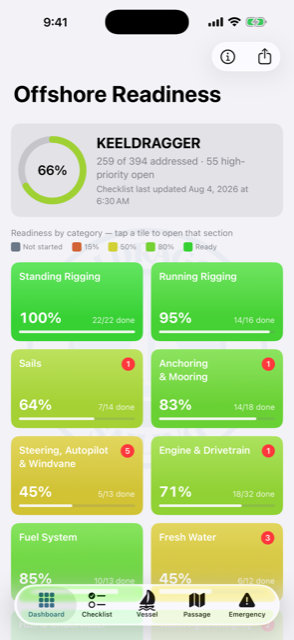
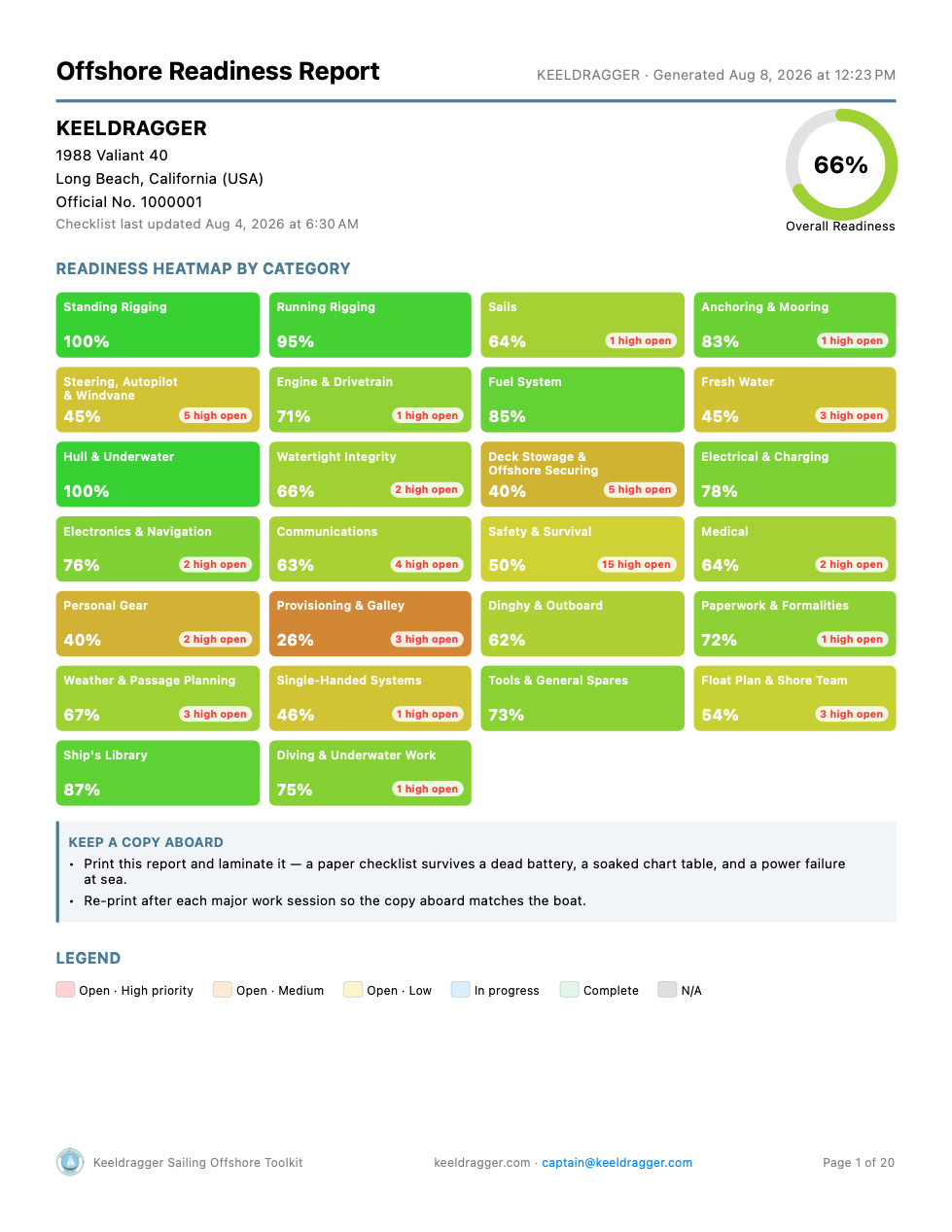
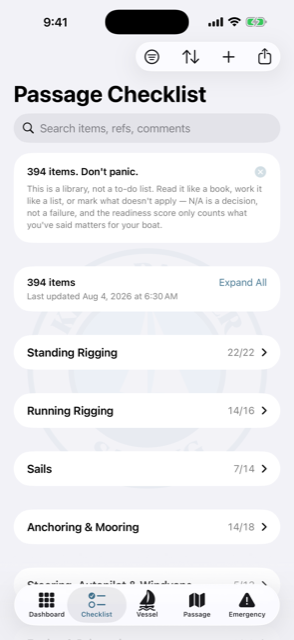
Self-assess across 26 boat systems and nearly 400 checklist items — rigging to medical kit. A readiness heatmap shows weak systems at a glance, and a stack-ranked priority work list puts the highest-risk open items on top. Attach photos, add your own items, mark what doesn't apply.
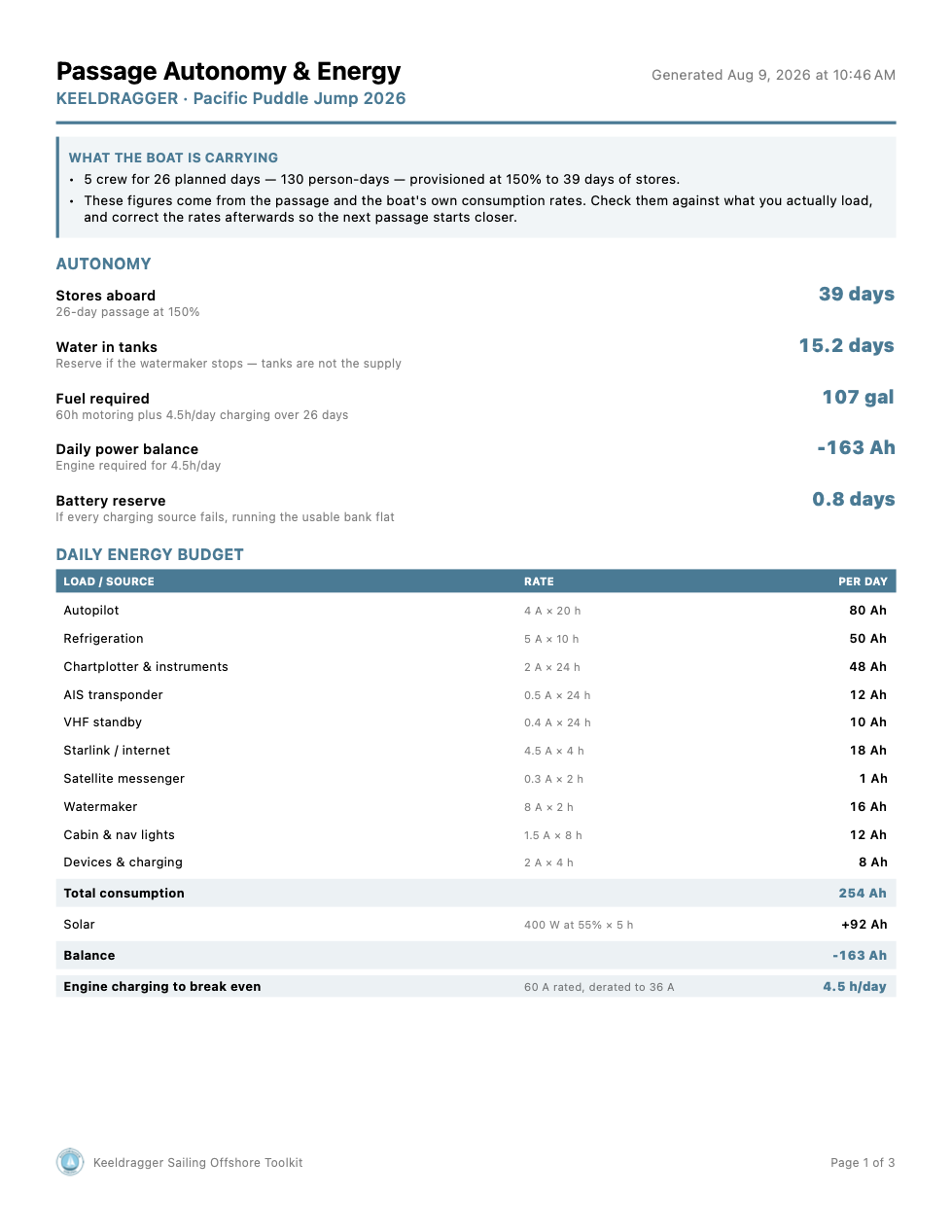
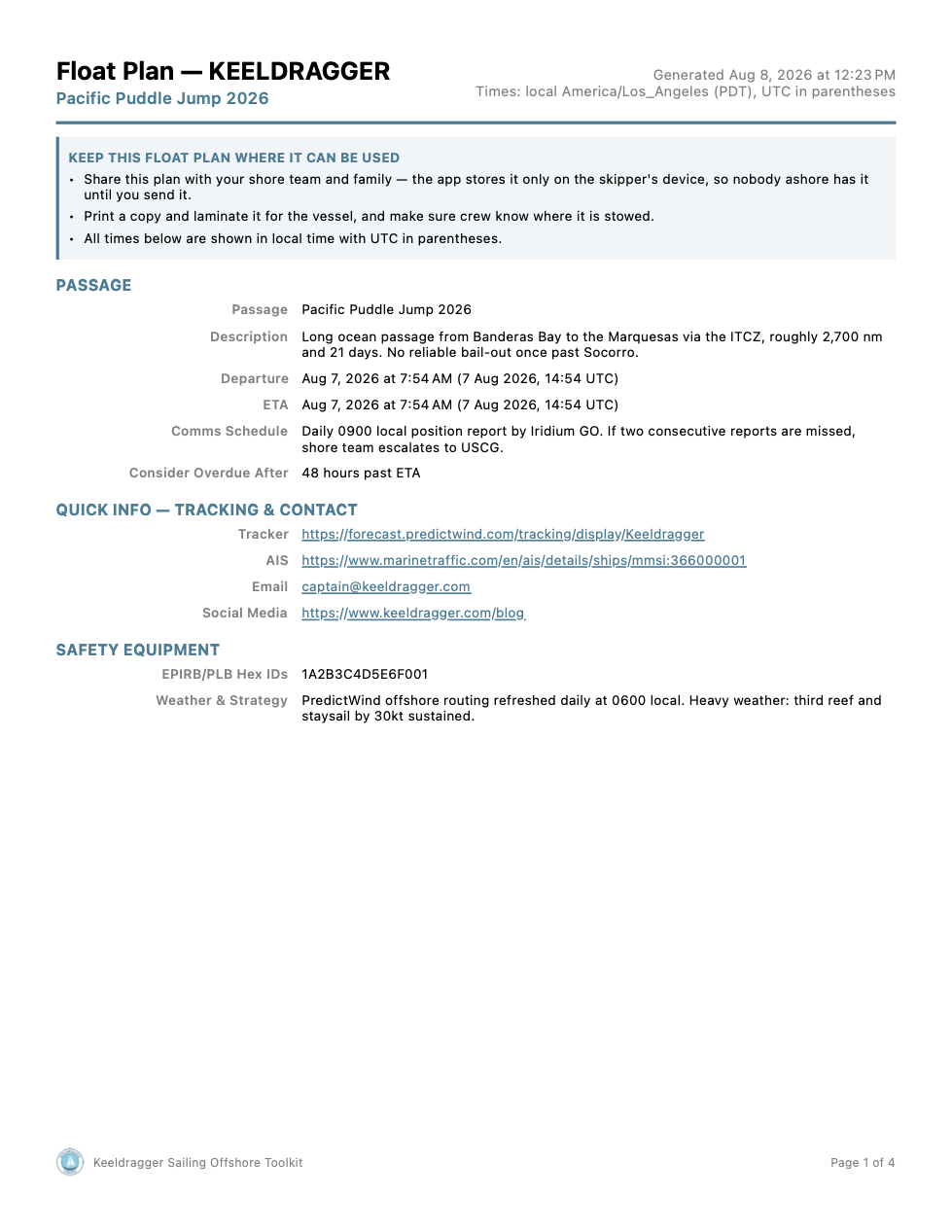
Vessel description written for search and rescue, crew with photos and critical health information, itinerary with waypoints, comms schedule, an autonomy summary — days of stores, water, fuel, and power — and exactly what to do if you're overdue.
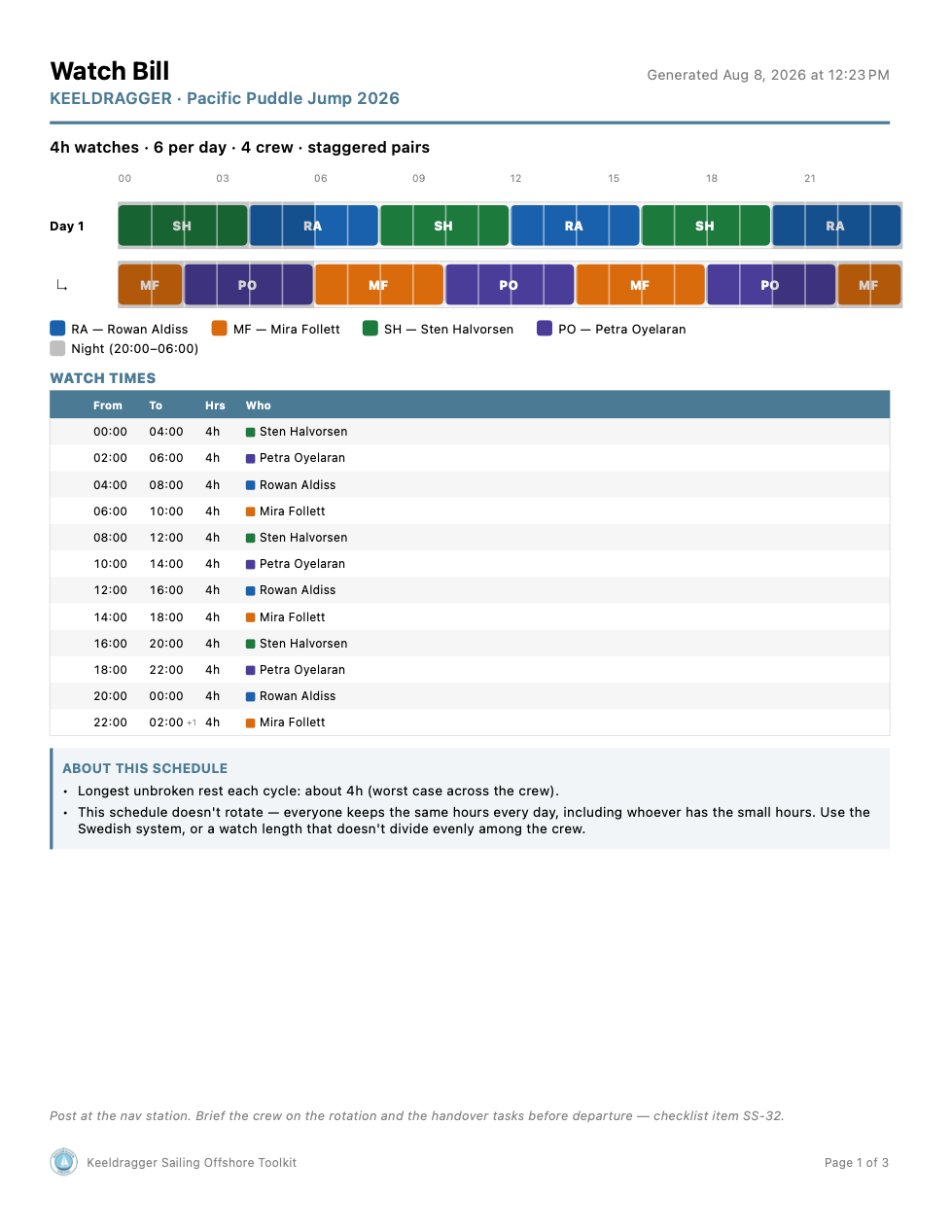
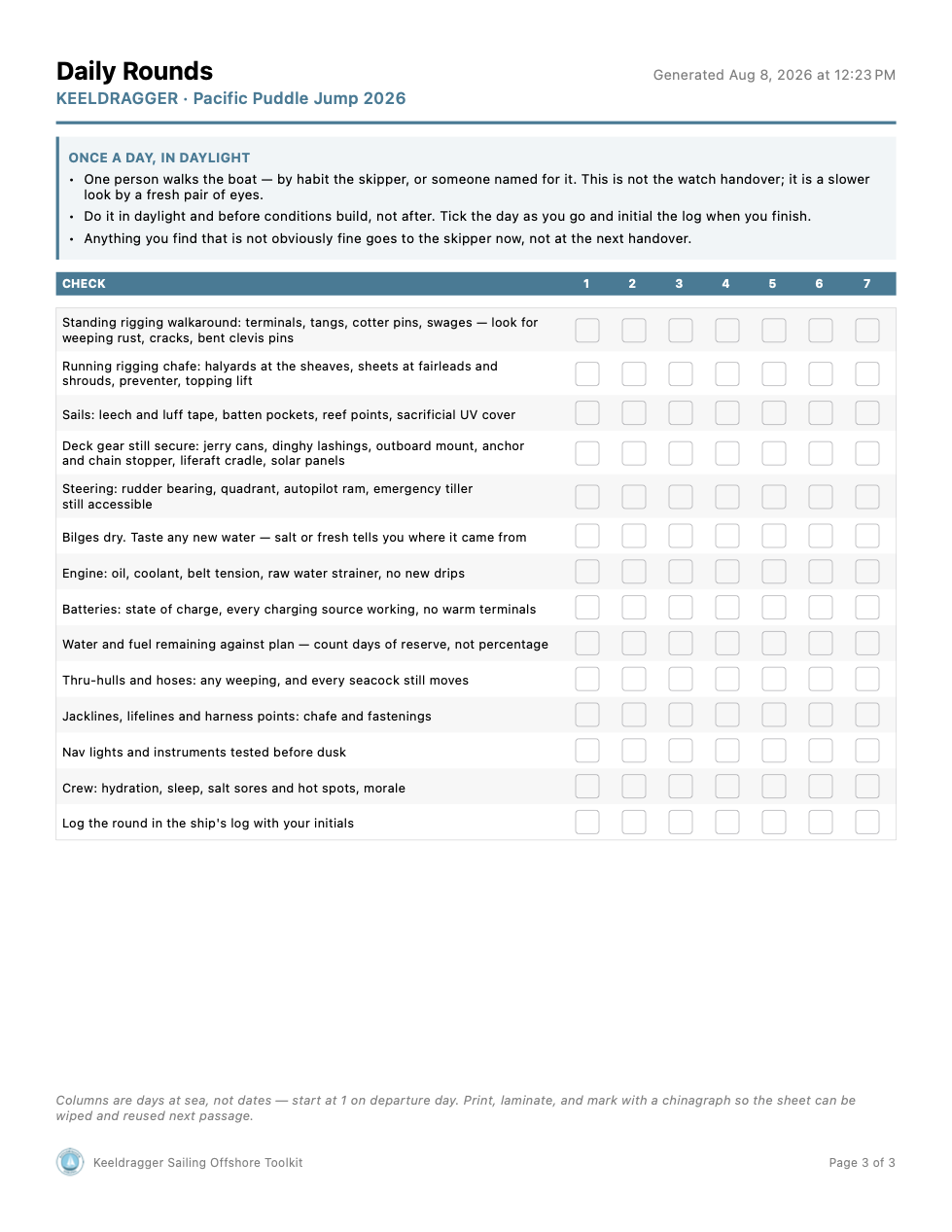
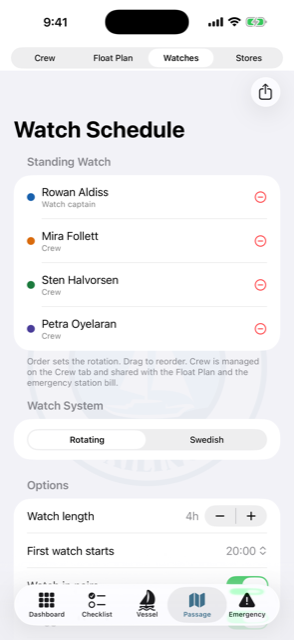
Rotating watches, the Swedish system, staggered pairs, or a solo rest plan. A visual grid with exact start and stop times, handover tasks for coming on and going off, and a seven-day daily-rounds tick sheet for the walkaround that keeps small problems small.
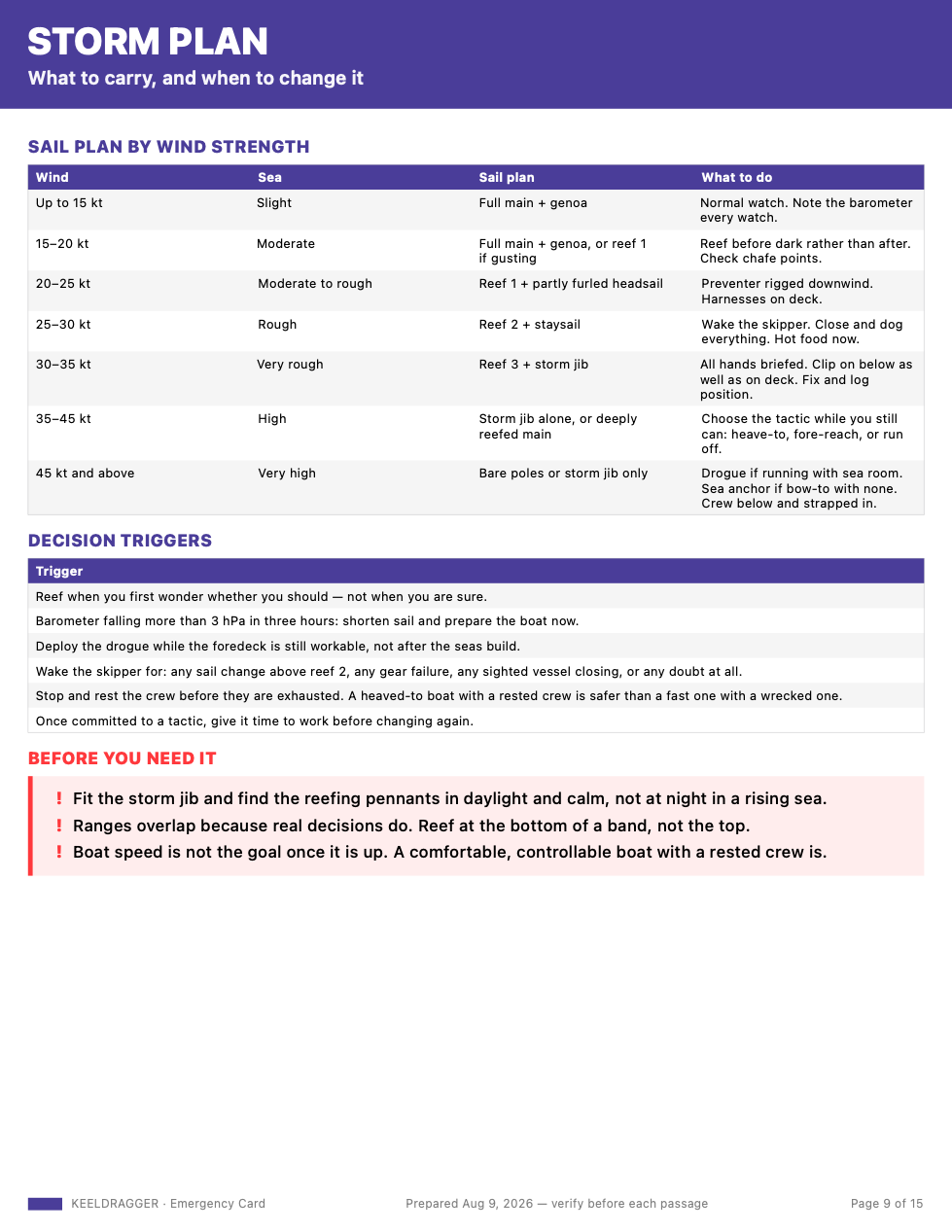
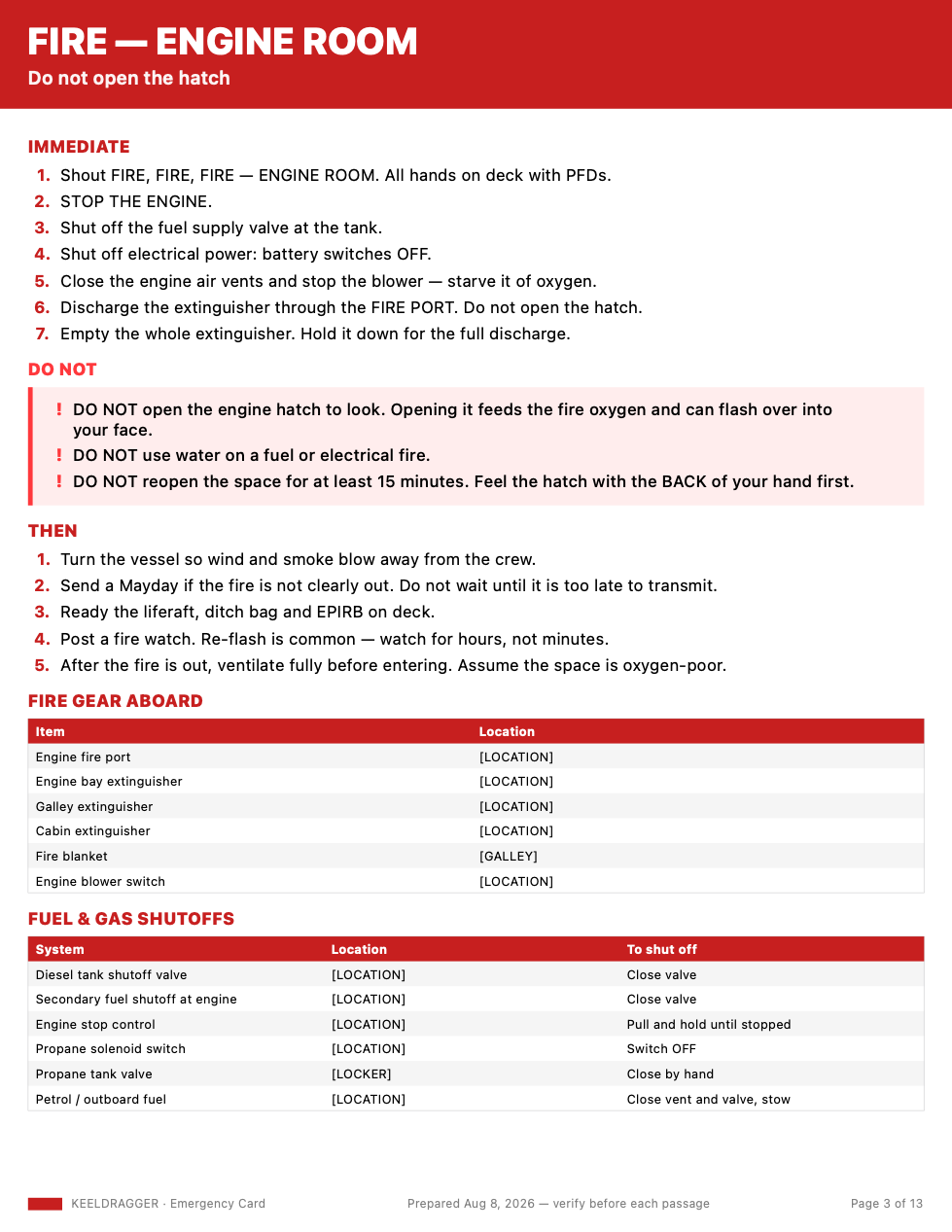
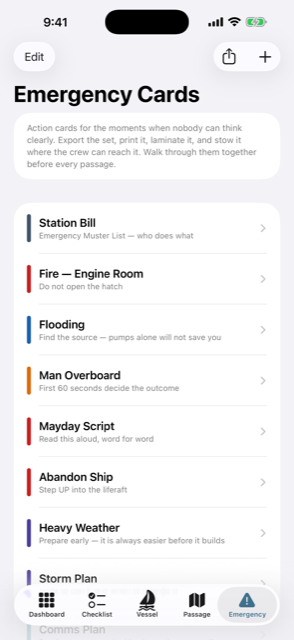
Thirteen action cards loosely modeled on SOLAS muster conventions — fire, flooding, man overboard, the Mayday script, abandon ship, a storm plan by wind band, a comms plan, seacock locations, electrical isolation. Pre-filled for a cruising sailboat; every line editable for yours. Print, laminate, stow within reach.
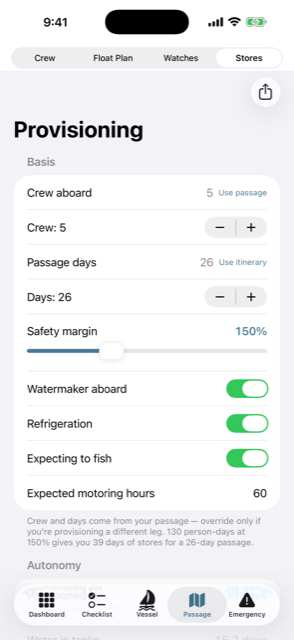
Crew and days come from your passage; you set a safety margin and a few toggles and get a shopping-quantity sheet — water, protein, staples, watch snacks, consumables, morale stores. Rates are the boat's appetite: tune them once and the next passage already knows how much coffee you drink.
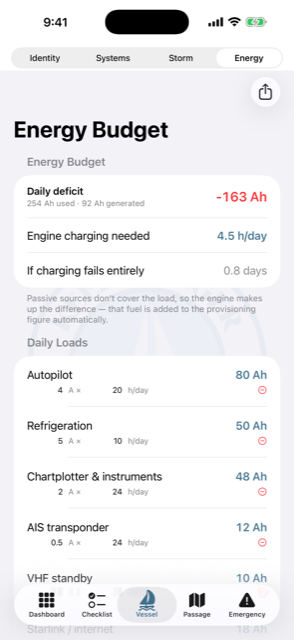
A daily amp-hour balance: loads against solar, wind, and hydro — realistically derated — with the engine hours needed to close any gap, and how long the bank lasts if charging fails. That engine fuel is added to your provisioning figure automatically.
Check what you want and the toolkit binds it into a single PDF behind a cover sheet — with a clickable contents list that jumps to each section. One file to print for the boat, one to send ashore, and a photo-quality control that keeps it small enough for a satellite connection.
Install it on iPhone, iPad and Mac — or start in a browser on any machine at all: Windows, Android, the salon laptop, a borrowed computer. Keep them in step through your own iCloud, or through a free Keeldragger account that encrypts everything on your device before it syncs.
Work the checklist over weeks or months — or just read it. The priority list tells you what matters next; the heatmap tells you when a system is actually ready.
Walk the crew through the watch bill, the handover tasks, and every emergency card before departure — the cards are for recall under stress, not for learning on the day.
The laminated set lives at the nav station: watch times, daily rounds checked off with a grease pencil, and action cards where they can be reached in the dark.
Everything lives locally — on your iPhone, iPad or Mac, or in your browser — and the whole toolkit works offline. Nothing is sent anywhere unless you switch on one of the sync options, and they start off.
Sync through your own iCloud, which never reaches us at all. Or use a free Keeldragger account, where your boat is encrypted on your device with a passphrase only you know — what we hold is ciphertext we cannot read, crew passports and medical details included.
No ads, no analytics, no third parties, and nothing shared until you export it. Print the packet, save it as a PDF, or send it — to exactly the people you choose. A full backup-and-restore keeps your data portable, and an account can be deleted outright, in the app, whenever you like.